Three Reasons Why You're Best Robot Vacuum 2023 Is Broken (And How To Fix It)


The Best Robot Vacuum 2023
Robot vacuums can make cleaning your floors a breeze. The most effective robot vacuums clean up dirt, pet hair, crumbs and more.
While they can't perform the same way as a regular vacuum cleaner, they have improved a lot in the past few years. They're more sophisticated, more powerful, and (marginally better) in avoiding chair leg.
Smart Mapping
Robot vacuum cleaners employ tools for navigation, such as sensors and lasers to navigate around your home. They collect pet hair, crumbs and dirt from floors made of hard materials like tile, wood and laminate, as well as low-pile area rugs and carpets. The most advanced robots map your home, to help them keep track of where they've been and avoid hitting obstacles like sofas, chairs and bookshelves that you may prefer to keep out of your way. You can also use your smartphone app to create no-go zones, which tell your robot to stay out of rooms you don't want it to clean.
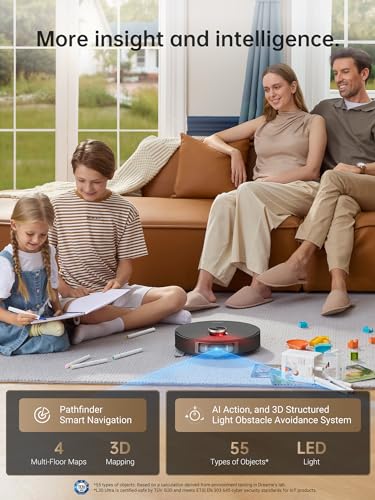
Robots with advanced mapping abilities like the Roomba J7, make use of an onboard camera and processor-powered intelligence to see and avoid obstructions. best robot vacuum cleaner for pet hair means that you can leave it alone to get a thorough cleaning without having to continuously monitor the state of your floorplan or manually remove obstacles from the robot's path. The TP Link Tapo RV30 Plus is a robotic device that combine vacuuming and mopping. It's a one-stop solution to keep your home tidy. It has a great suction and works with Alexa or Google Assistant. It is self-emptying and is also able to be used as a security camera.
A less expensive bot that vacuums, mop and can be used as a robotic trashcan, the Roborock Q Revo is a solid option for homes that don't require the more sophisticated features of more expensive models. There are some drawbacks when compared to the Roomba S8 and J7. It uses only one brush, not dual roller brushes, so it might not be as effective at removing larger objects like shoes and socks. It doesn't have AI obstacle avoidance, so you may need to clear obstructions before you run.
The iLife A4s Pro robot is an easy-to-use reliable robot for those who value simplicity and competence. It costs less than $200 and offers consistent, solid suction on hardwood and carpets with low pile and also avoids tangles caused by rug threads. It's not a lot of technology however, it's effective. It also works with voice commands. It can be set up to run a program, or create zones that are not allowed to be used using the app.
Object Detection
Object-avoidance technology can affect a robot vacuum's ability to navigate your home. Certain models on our list include sensors (or even cameras) which help your robo-cleaner avoid common traps for robots such as cords, kids' toys and pet messes. iRobot Roomba J7, one of the most impressive examples of intelligent technology in motion, is an excellent example. It also has a stylish clean base that empties the trash bin automatically so that you don't need to.
During testing, we set this robotic cleaner up in a large home and were amazed by the speed and efficiency with which it cleared floors without becoming bogged down. It's incredibly maneuverable and can reach places that most stand-up vacs cannot go, including under sofas and under beds. It also has great suction, a massive 500 ml dustbin, and an over two-hour running time. However, it lacks the ability to create zones that are not allowed to be used and its object detection is a bit hit-or-miss and we did see it bump into things occasionally during our tests (resulting in a few toppled vase tops).
It's important to keep in mind that no matter how clever the robot vacuum might appear but it can't replace your regular canister or upright vacuum. It's not equipped to handle heavily stained carpets, it will not reach into every crevice, and it won't reach your ceilings or other difficult-to-access areas. It's a great addition to your regular cleaning routine for getting rid of hair, and pet dander.
Most robot vacuums have sensors that allow them to navigate through obstacles and steps. They are able to tell when they're about to fall down the stairs, for instance, and they can detect areas that are cluttered and move around them. However, if you're not vigilant, your robo-cleaner might become stuck on a cord or shoe and need some help.
Some robot vacuums are equipped with mapping capabilities, which allow them to make an precise floor plan of your home and locate themselves. This lets them know which areas they've already cleaned and avoid the hassle of going over the same areas. This lets them resume where they left off in the event that they have to return to the charging dock.
Self-Emptying
A vacuum cleaner that can automatically empty its bin after it is full is a great convenience. Some models have a window that allows you to observe when the bin is due to be empty. This is a great option for anyone with pets or children who tend to create more mess than adults.
Most robot vacuums let you select whether the machine is operated with the use of a remote, an app from your phone, or through voice commands. They also come with a variety of digital functions, including maintenance and scheduling. With the correct settings, you can program your robot to clean on a regular time, or on a weekly basis. You can also program it to mark and clean specific areas of your house.
Some of the most intelligent robot vacuums we've tested come with built-in cameras and sensor technology that allows them to create maps of your home. You can save these maps within the robot app to easily navigate through your home. Some of these systems will even keep track of the furniture's placement and transitions between hard flooring and carpet.
Smart vacuums save time by mapping and cleaning entire houses by themselves and also keeping detailed records of the cleaning sessions that have occurred previously. You can access these records through an app that you can install on your tablet or smartphone. They can also be connected to your smart speaker, so you can control them with voice commands.
TP-Link Tapo RV30+ is self-emptying robot that provides outstanding performance for a reasonable cost. It is able to clean floors and sweep up pet hair and other particles from hardwood and low-pile rugs. It's not as advanced as some of the other robots we've reviewed, however, it does what it does efficiently.
The tank-like wheels on this model allow it to roll across the high transitions between rooms as well as obstacles like tangled cords from devices which can cause a problem for other robots. It has a large bin that doesn't need to be empty manually and is able to recharge itself and restart cleaning when it runs out power. It's more expensive than the other robotic vacuums that we've tested however it has powerful suction and simple controls to deliver an excellent value.
Voice Control
The majority of robot vacuums can be controlled by a remote or an app for a smartphone. Some models can also be integrated with smart speakers like Amazon Echo or Google Home, allowing you to control them using voice commands. This can be helpful if you have small pets or children that could hinder your cleaning, or if you're too exhausted to control the robot by hand.
Most models have an automatic mode that operates without your input. The robot can be started by pressing a button on the app or on the robot. The robots can be programmed to clean in accordance with a schedule, making them ideal for those who simply need to set and forget.
Some of the higher-end models have a feature that makes use of artificial intelligence to scan and detect obstructions in your home. They can detect things such as power cords, stairs, and furniture, and can even distinguish between different types of floors. This can help robots avoid hazards. This is particularly useful in homes with large areas of carpeting and other flooring coverings that are difficult for robots navigate.
Some robots are more basic in their object detection abilities however, they still get the job done. One example is the TP-Link Tapo RV30 plus, which has the clean, fuss-free appearance of a wifi hub but boasts a lot of the capabilities of a top-of-the-line bot. It has a powerful suction and can clean dirt and debris from medium-pile rugs and hardwood floors. Its squat and short side brush is less likely to get caught in shoes or cords. The hybrid roller brush, which is made up of bristles, as well as plastic, provides a thorough cleaning.
The model is more expensive than other mid-range robots but it does everything you require from mopping and vacuuming robots. It can map and build a cleaning schedule, has virtual keep-out zones and is compatible with voice assistants. It doesn't offer the same room-scanning feature and obstacle avoidance like the j7 or s8.